Global Securities Firms Regulatory Inquiry App
How Long Will the Fed's Rate Cuts Last?
According to Powell's comments, the neutral interest rate may be adjusted upward in the future, but the pace of rate cuts will no longer be at a 50 basis point level. Economic data remains the main basis for decision-making.
Last Wednesday, following the Fed's significant rate cut of 50 basis points, the market began to focus on where the endpoint of the rate cuts is and how fast they will occur.
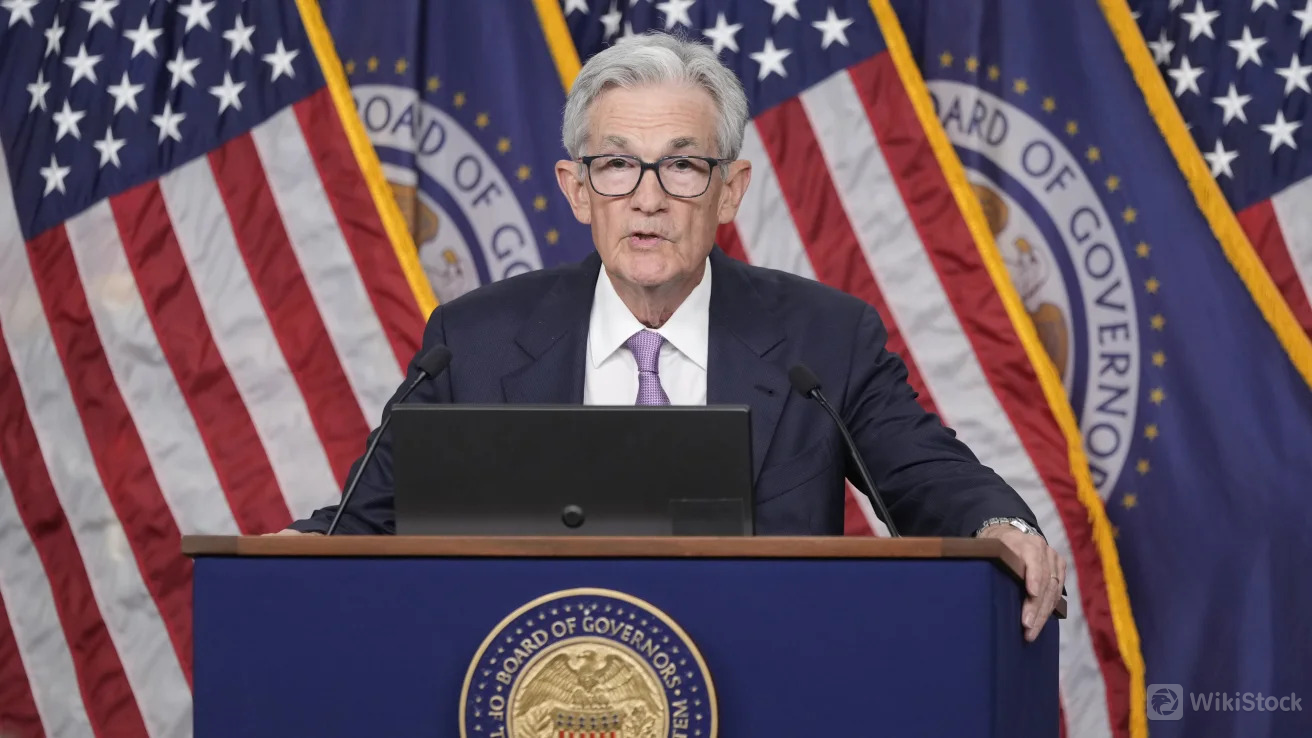
Image Source: Yahoo Finance
Powell pointed out that the “endpoint of rate cuts” actually refers to the neutral interest rate, which is the theoretical rate that guides monetary policy. He stated that there is still a great deal of uncertainty in assessing the neutral rate, but emphasized, “We will not return to the era of ultra-low interest rates.” He added, “The future neutral rate may be much higher than before, and we are unlikely to see trillions of dollars in sovereign bonds trading at negative rates again.”
Regarding the speed of rate cuts, Powell emphasized that this cut should not be seen as a new norm, and economic data will guide future decisions: “Data will drive our monetary policy, and the pace of rate cuts will be adjusted as needed—whether to accelerate, slow down, or pause.”
Furthermore, the Fed faces dual risks concerning the outlook for interest rates. On one hand, if rate cuts are delayed, the unemployment rate may rise, forcing officials to urgently implement larger cuts. On the other hand, if rate cuts are too swift, the likelihood of inflation failing to reach the 2% target will increase.
Notably, in this decision, the Fed no longer emphasizes that “the risks to achieving employment and inflation targets are tilting toward a better balance,” but instead states that “the risks are generally balanced,” and adds language emphasizing the avoidance of employment risks.
Powell also attempts to find a balance between “concerns about the economy” and “complacency regarding employment risks”: “Some believe that measures to support the labor market are usually taken when the market is still strong, rather than when layoffs begin to occur.”
This year, the Fed will hold FOMC meetings in November and December. Ongoing economic signals will continue to bring similar uncertainties to the next meeting.
Promoting the development of lithium and sodium in the new energy industry
 WikiStock
More than 20 A-share companies will be at risk of delisting!
WikiStockIs Xiaohongshu's major shareholder selling shares valued at 20 billion?
WikiStockTikTok "refugees" move to Xiaohongshu. How long will this craze last?
WikiStockCheck whenever you want
WikiStock APP